UrbanSurivalSkills.com received the following question regarding Urban Survival Firearms and choices of caliber. "Me and another Survival prepper are deciding on what gun we are going to get. I’m thinking that an M-16 type rifle in the 6.8mm cartridge would give us both firepower and stopping power. What do you think?"
Urbanman replies: The 6.8 SPC (6.8 x 43mm) due to it’s overall length and relative low chamber pressure made the M16 or AR platform adaptable to this cartridge. Although the bullet diameter is smaller, I tend to think of this cartridge like a the M43 AK round (7.62x39mm).
It is a good stopper and was developed and pushed by elements of the Army Special Forces community to replace the 5.56x45mm (.223 Remington) as small groups of Special Operators would find themselves in a "target rich environment" and the 5.56 was failing to put people down for the count. This was largely due to the SS109 bullet - steel core penetrator, which had too much penetration and did not leave all of it's energy in soft skinned targets.
The 5.56x45mm standard military round in the 62 grain SS109 configuration has a muzzle velocity of approximatley 2,700 fps depending upon barrel lengnth. The 6.8x43mm SPC round with a 115 grain bullet travels at 2,800 fps. More diameter and weight, and more velocity, give the 6.8mm SPC the edge of which round is a better stopper.
I would not begrudge anyone going to the 6.8mm round in an AR platform. The considerations would be ammunition availability and price - certainly much, much cost involved than stocking the abundant .223 Remington. The cost difference between equal amounts of rounds has to have the 6.8mm SPC costing twice as much if not more. Are you going to be to stock 4,000 rounds per gun? That's my base figure for ammunition on hand for each main long gun. I'll stick to my AR platforms and the 5.56x45mm round.
The bottom line, as I am reminded by readers all too often, is to have a long gun for these lawless survival environments; be able to use it well; and have sufficient ammunition for it. Sounds like good advice to me.
Friday, September 3, 2010
Thursday, September 2, 2010
Urban Survival - Surviving Natural Disasters - Hurricanes
With Hurricane Earl make a change in direction towards and rapidly approaching the East Coast placing people and property at risk – like a societal collapse scenario, we thought this post was appropriate. As of 1400 hours EST today, Thursday 2 Sept, Hurricane Earl is a Category 3 Hurricane with 125 mph winds.
Although no good will come out a Hurricane and the possible floods and criminal activity that can and will result…it is a time to exercise of your Survival Plans intended for a Total Collapse Scenario or what we know as TEOTEAWKI.
Understand the threat. For Natural weather based disasters, especially with forewarning as is the case with Hurricanes, go to the National Oceanic and Atmospheric Administration (NOAA) Weather Watch site: http://www.noaawatch.gov/ to obtain the latest information on conditions. You’ll see some graphics like the one below that will give you an idea on the, in this case, Hurricane path. A Hurricane Watch means a hurricane is possible in your area. Be prepared to evacuate. Monitor local radio and television news outlets or listen to NOAA Weather Radio for the latest developments. A Hurricane Warning is when a hurricane is expected in your area. If local authorities advise you to evacuate, leave immediately.
Hurricanes are classified into five categories based on their wind speed, central pressure, and damage potential. Category Three and higher hurricanes are considered major hurricanes (using the Saffir-Simpson Hurricane Scale), though Categories One and Two are still extremely dangerous and warrant your full attention. Hurricanes can produce widespread torrential rains. Floods are the deadly and destructive result. Slow moving storms and tropical storms moving into mountainous regions tend to produce especially heavy rain. Excessive rain can trigger landslides or mud slides, especially in mountainous regions. Flash flooding can occur due to intense rainfall. Flooding on rivers and streams may persist for several days or more after the storm. See chart below:
Home Preparation.
Cover all of your home's windows with pre-cut ply wood or hurricane shutters to protect your windows from high winds. Boy, ain’t Floridians good at this?
Plan to bring in all outdoor furniture, garbage cans and anything else that is not tied down. High winds can make anything not strapped down or secured into a missile – kinda like a fragmentation grenade.
Keep all trees and shrubs well trimmed so they are more wind resistant.
Secure your home by closing shutters, and securing outdoor objects or bringing them inside.
Turn off utilities as instructed. Otherwise, turn the refrigerator thermostat to its coldest setting and keep its doors closed.
Turn off propane tanks.
Ensure a supply of water for sanitary purposes such as cleaning and flushing toilets. Fill the bathtub and other large containers with water.
Family – Personnel Prep.
Ensure Bug Out Bags are packed and ready to go. Fill water bottles and add last minute food items. Put fresh batteries in your radios and re-charge all cell phones. This is your chance to update the BOB’s as well as to place in new medications, and/or change out expired meds and first aid items, etc.
Ensure all documents you need are included such as birth certificates, shot records, social security cards, insurance policies and paperwork, wills or trust paperwork, birth, marriage and death certificates, tax records, etc.
If you have time, get more cash out of the bank or ATM.
Family or Survival Group Emergency Plan.
Brief your family or survival group emergency plan. Ensure everyone knows the routes and location for your rally points or rendezvous locations.
Ensure everyone has a list of all phone numbers, radio frequencies and any code words you are using.
Pack and load all vehicles that you intend on using. Hey, this is a good chance to see if everything fits and/or or learn to prioritize your Survival Bug Our Vehicle Load List.
This also may be the first time you have considered what you are going to do about your pets and if you have the material and resources to take them with you during the Bug Out.
Be prepared to move on foot and use ropes to secure each to one another and strobe lights or chem lights to mark people for control and locating in periods of no visibility such as driving rain, extremely high winds, or total darkness.
Lastly, be prepared to protect yourself and your family or Survival Group. Your situational awareness and security measures should be at or near the peak. Criminal elements are active during the disasters and through the aftermath,... ...robberies, looting, looking for victims are all high on the criminal or gang operational priority list.
Although no good will come out a Hurricane and the possible floods and criminal activity that can and will result…it is a time to exercise of your Survival Plans intended for a Total Collapse Scenario or what we know as TEOTEAWKI.
Understand the threat. For Natural weather based disasters, especially with forewarning as is the case with Hurricanes, go to the National Oceanic and Atmospheric Administration (NOAA) Weather Watch site: http://www.noaawatch.gov/ to obtain the latest information on conditions. You’ll see some graphics like the one below that will give you an idea on the, in this case, Hurricane path. A Hurricane Watch means a hurricane is possible in your area. Be prepared to evacuate. Monitor local radio and television news outlets or listen to NOAA Weather Radio for the latest developments. A Hurricane Warning is when a hurricane is expected in your area. If local authorities advise you to evacuate, leave immediately.
Hurricanes are classified into five categories based on their wind speed, central pressure, and damage potential. Category Three and higher hurricanes are considered major hurricanes (using the Saffir-Simpson Hurricane Scale), though Categories One and Two are still extremely dangerous and warrant your full attention. Hurricanes can produce widespread torrential rains. Floods are the deadly and destructive result. Slow moving storms and tropical storms moving into mountainous regions tend to produce especially heavy rain. Excessive rain can trigger landslides or mud slides, especially in mountainous regions. Flash flooding can occur due to intense rainfall. Flooding on rivers and streams may persist for several days or more after the storm. See chart below:
Home Preparation.
Cover all of your home's windows with pre-cut ply wood or hurricane shutters to protect your windows from high winds. Boy, ain’t Floridians good at this?
Plan to bring in all outdoor furniture, garbage cans and anything else that is not tied down. High winds can make anything not strapped down or secured into a missile – kinda like a fragmentation grenade.
Keep all trees and shrubs well trimmed so they are more wind resistant.
Secure your home by closing shutters, and securing outdoor objects or bringing them inside.
Turn off utilities as instructed. Otherwise, turn the refrigerator thermostat to its coldest setting and keep its doors closed.
Turn off propane tanks.
Ensure a supply of water for sanitary purposes such as cleaning and flushing toilets. Fill the bathtub and other large containers with water.
Family – Personnel Prep.
Ensure Bug Out Bags are packed and ready to go. Fill water bottles and add last minute food items. Put fresh batteries in your radios and re-charge all cell phones. This is your chance to update the BOB’s as well as to place in new medications, and/or change out expired meds and first aid items, etc.
Ensure all documents you need are included such as birth certificates, shot records, social security cards, insurance policies and paperwork, wills or trust paperwork, birth, marriage and death certificates, tax records, etc.
If you have time, get more cash out of the bank or ATM.
Family or Survival Group Emergency Plan.
Brief your family or survival group emergency plan. Ensure everyone knows the routes and location for your rally points or rendezvous locations.
Ensure everyone has a list of all phone numbers, radio frequencies and any code words you are using.
Pack and load all vehicles that you intend on using. Hey, this is a good chance to see if everything fits and/or or learn to prioritize your Survival Bug Our Vehicle Load List.
This also may be the first time you have considered what you are going to do about your pets and if you have the material and resources to take them with you during the Bug Out.
Be prepared to move on foot and use ropes to secure each to one another and strobe lights or chem lights to mark people for control and locating in periods of no visibility such as driving rain, extremely high winds, or total darkness.
Lastly, be prepared to protect yourself and your family or Survival Group. Your situational awareness and security measures should be at or near the peak. Criminal elements are active during the disasters and through the aftermath,... ...robberies, looting, looking for victims are all high on the criminal or gang operational priority list.
Labels:
Criminal Looters,
Floods,
Hurricanes,
Natural Disasters,
Urban Survival
Wednesday, September 1, 2010
Urban Survival Preparation - Firearms and Food suggestions for a Reader
UrbanSurvivalSkills.com received a comment on the post Urban Survival Planning - Lessons Learned from Katrina,…." Anonymous said…. Urban, I have started a Survival Group with my friends. Most of us have handguns and a few rifles, but have agreed to spend $1000 each on a standard rifle and $250 each on some long storage food. Can you give us some ideas on what we should be looking at for a standard gun and even food?”
Urbanman replies: On the standard rifle issue. Standardization is good for commonality of ammunition, magazines, parts and training. There is something to be said for having a wide range of calibers to ensure ammunition can be found and/or bartered for, but I would prefer to stock enough from the get go, otherwise you could be at someone’s mercy.
I suspect that the $1000 agreed upon per person was to include all required accessories including load bearing kit, extra mags, cleaning kits, etc. If that is the case, a $1000 threshold makes it difficult to purchase AR type rifles for all including the necessary magazines. However, I’m going to assume that you all can save enough money for the next couple of months to purchase these and the $1000 is going only for a rifle nothing more. In that case the hands down winner would be an AR type rifle in the .223 Remington (also known as the 5.56x45mm) cartridge. I’m sure you can find various manufacturers’ copies of the M-4 carbine for under $1000. If your local gunshop cannot get them for that price, check of Gun Broker who can ship them to your gun shop and they should handle that the required transaction for a nominal fee, probably around $25 per gun.
I also saw where Cheaper than Dirt is offering various M-4 type clones for around $830 which would leave some room for purchasing some kit.
Ruger Mini-14’s are a good rifle. The sights are not as good as the AR types, but still serviceable. They take different magazines than the AR type of rifle but still shoot the .223 Remington and are reliable. These probably run around $650 or so.
As far as long duration food stocks, that would mean dehydrated food for maximum duration. I would stay away from one person buying dehydrated vegetables and the other buying dehydrated fruit. Each person’s purchased stocks should complete and standalone in case one or more of the Urban Survival Group members does not make it to the rendezvous.
If I was going to put only $250 into foods stocks then I would buy inclined to spend most of it on #10 cans of dehydrated food (meat, fruits and vegetables) and the rest on rice, beans, and bullion to store in vacuumed packed bags or better yet, sealed Mylar bags with oxygen absorbers.
I hope you all realize that guns and food are great, two of your essentials needs, but preparation across the board needs to be conducted such as procurement of a wide variety of Survival Gear, Equipment and Material and set up of Bug Out Bags. You should consider purchasing some previous metals such as Gold and Silver. Silver rounds or bullion is still fairly cheap and can be purchased in small amounts as you budget allows. I think procuring Silver for Survival and an insurance currency for barter is important.
Other than the above, I can't give you some specific recommendations unless I know what Urban Survival assets (Gear, Equipment, Material and Firearms) that you already have on hand. Good luck buddy.
Urbanman replies: On the standard rifle issue. Standardization is good for commonality of ammunition, magazines, parts and training. There is something to be said for having a wide range of calibers to ensure ammunition can be found and/or bartered for, but I would prefer to stock enough from the get go, otherwise you could be at someone’s mercy.
I suspect that the $1000 agreed upon per person was to include all required accessories including load bearing kit, extra mags, cleaning kits, etc. If that is the case, a $1000 threshold makes it difficult to purchase AR type rifles for all including the necessary magazines. However, I’m going to assume that you all can save enough money for the next couple of months to purchase these and the $1000 is going only for a rifle nothing more. In that case the hands down winner would be an AR type rifle in the .223 Remington (also known as the 5.56x45mm) cartridge. I’m sure you can find various manufacturers’ copies of the M-4 carbine for under $1000. If your local gunshop cannot get them for that price, check of Gun Broker who can ship them to your gun shop and they should handle that the required transaction for a nominal fee, probably around $25 per gun.
I also saw where Cheaper than Dirt is offering various M-4 type clones for around $830 which would leave some room for purchasing some kit.
Ruger Mini-14’s are a good rifle. The sights are not as good as the AR types, but still serviceable. They take different magazines than the AR type of rifle but still shoot the .223 Remington and are reliable. These probably run around $650 or so.
As far as long duration food stocks, that would mean dehydrated food for maximum duration. I would stay away from one person buying dehydrated vegetables and the other buying dehydrated fruit. Each person’s purchased stocks should complete and standalone in case one or more of the Urban Survival Group members does not make it to the rendezvous.
If I was going to put only $250 into foods stocks then I would buy inclined to spend most of it on #10 cans of dehydrated food (meat, fruits and vegetables) and the rest on rice, beans, and bullion to store in vacuumed packed bags or better yet, sealed Mylar bags with oxygen absorbers.
I hope you all realize that guns and food are great, two of your essentials needs, but preparation across the board needs to be conducted such as procurement of a wide variety of Survival Gear, Equipment and Material and set up of Bug Out Bags. You should consider purchasing some previous metals such as Gold and Silver. Silver rounds or bullion is still fairly cheap and can be purchased in small amounts as you budget allows. I think procuring Silver for Survival and an insurance currency for barter is important.
Other than the above, I can't give you some specific recommendations unless I know what Urban Survival assets (Gear, Equipment, Material and Firearms) that you already have on hand. Good luck buddy.
Tuesday, August 31, 2010
Urban Survival Planning - Collapse Catalyst: Solar Storms
UrbanSurvivalSkills.com was one of the early groups that discounted the potential for Solar Storms to wreck havoc on our infrastructure. However, after having reviewed several sources concerning the potential for solar storms to precipitate a infrastructure disaster, we now think we have to take the threat seriously.
Analysis of the Threat:
Source: http://www.prisonplanet.com/massive-solar-storm-to-hit-earth-in-2012-with-force-of-100m-bombs.html
Astronomers are predicting that a massive solar storm, much bigger in potential than the one that caused spectacular light shows on Earth earlier this month, is to strike our planet in 2012 with a force of 100 million hydrogen bombs. Several US media outlets have reported that NASA was warning the massive flare this month (August 2010) was just a precursor to a massive solar storm building that had the potential to wipe out the entire planet’s power grid. Despite its rebuttal, NASA’s been watching out for this storm since 2006 and reports from the US this week claim the storms could hit on that most Hollywood of disaster dates – 2012. Similar storms back in 1859 and 1921 caused worldwide chaos, wiping out telegraph wires on a massive scale. The 2012 storm has the potential to be even more disruptive.
"The general consensus among general astronomers (and certainly solar astronomers) is that this coming Solar maximum (2012 but possibly later into 2013) will be the most violent in 100 years," News.com.au quoted astronomy lecturer and columnist Dave Reneke as saying. A bold statement and one taken seriously by those it will affect most, namely airline companies, communications companies and anyone working with modern GPS systems.
Source: http://www.csmonitor.com/Science/2010/0609/Solar-storms-to-erupt-soon.-What-will-be-the-impact-on-Earth
The sun is about to get a lot more active, which could have ill effects on Earth. So to prepare, top sun scientists met Tuesday (8 June 2010) to discuss the best ways to protect Earth's satellites and other vital systems from the coming solar storms. Solar storms occur when sunspots on our star erupt and spew out flumes of charged particles that can damage power systems. The sun's activity typically follows an 11-year cycle, and it looks to be coming out of a slump and gearing up for an active period.
"The sun is waking up from a deep slumber, and in the next few years we expect to see much higher levels of solar activity," said Richard Fisher, head of NASA's Heliophysics Division. "At the same time, our technological society has developed an unprecedented sensitivity to solar storms. The intersection of these two issues is what we're getting together to discuss."
People of the 21st century rely on high-tech systems for the basics of daily life. But smart power grids, GPS navigation, air travel, financial services and emergency radio communications can all be knocked out by intense solar activity. A major solar storm could cause twenty times more economic damage than Hurricane Katrina, warned the National Academy of Sciences in a 2008 report, "Severe Space Weather Events—Societal and Economic Impacts."
Source: http://www.solutionsfromscience.com/
John Kappenman and other experts have discovered a shocking secret of the sun; a solar cycle that produces magnetic storms so powerful they can literally turn our electric grid into a giant antenna, funneling enough power down the lines to fry sensitive and critical components like transformers.
And when those transformers go, experts say it may take as long as 10 years to replace them all. That's because there are only a few firms-mostly foreign-that make these sensitive and expensive grid components, and even more worrisome, there's already a 2-3 year waiting list.
Unfortunately, the protective bill passed by the US House of Representatives has been hijacked in the Senate and is unlikely to be passed in its original form, leaving our national infrastructure naked and defenseless. This means that when the electromagnetic storm hits, and experts agree it is a matter of when, not 'if', the backbone of our electrical system will be fried.
Threat Counter-Measures:
Assumptions – power solutions of a total collapse of the electrical grid cannot be primarily based on the use of fossil fuels as an collapse of the electrical grid would drastically effect all modes of transportation and therefore fuel availability as well as some percentage of crude oil previous destined for gasoline and diesel production would have to re-directed for use in power generation and heating that previous was received through the electrical grid.
How to keep the lights on when the grid goes dark:
What threat to our country is so great that the US House of Representatives voted unanimously to fund protection measures? Something so dangerous to the very foundations of our nation to unite people like socialist Dennis Kucinich and libertarian leader Ron Paul?
The answer will frighten you.
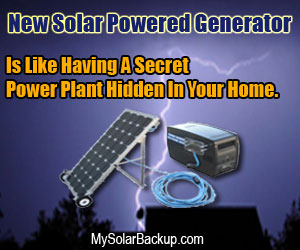
Neither you or I can do much about that, but what we can do is take some steps to keep the lights on in our own homes. Portable solar power generators like the Powerhub 1800 provide enough electricity to power your basic household needs and are separate from the grid and so therefore won't be effected by the solar storms that could ravage the grid.
The key to off-grid living and self-reliance has always been to detach ourselves from dependence on public infrastructure, and the Powerhub 1800 gives you just that; true energy independence. With two 150 watt solar panels, you can harness the power of the sun to keep your food fresh, preserve your medicines, power emergency devices and communications equipment, or just keep the lights on after dark. It's like having your own personal backyard power plant... one that will work cleanly and quietly even if the grid as we know it does collapse.
Check out Solutions from Science at the upper elft side of this page, or click here.
Analysis of the Threat:
Source: http://www.prisonplanet.com/massive-solar-storm-to-hit-earth-in-2012-with-force-of-100m-bombs.html
Astronomers are predicting that a massive solar storm, much bigger in potential than the one that caused spectacular light shows on Earth earlier this month, is to strike our planet in 2012 with a force of 100 million hydrogen bombs. Several US media outlets have reported that NASA was warning the massive flare this month (August 2010) was just a precursor to a massive solar storm building that had the potential to wipe out the entire planet’s power grid. Despite its rebuttal, NASA’s been watching out for this storm since 2006 and reports from the US this week claim the storms could hit on that most Hollywood of disaster dates – 2012. Similar storms back in 1859 and 1921 caused worldwide chaos, wiping out telegraph wires on a massive scale. The 2012 storm has the potential to be even more disruptive.
"The general consensus among general astronomers (and certainly solar astronomers) is that this coming Solar maximum (2012 but possibly later into 2013) will be the most violent in 100 years," News.com.au quoted astronomy lecturer and columnist Dave Reneke as saying. A bold statement and one taken seriously by those it will affect most, namely airline companies, communications companies and anyone working with modern GPS systems.
Source: http://www.csmonitor.com/Science/2010/0609/Solar-storms-to-erupt-soon.-What-will-be-the-impact-on-Earth
The sun is about to get a lot more active, which could have ill effects on Earth. So to prepare, top sun scientists met Tuesday (8 June 2010) to discuss the best ways to protect Earth's satellites and other vital systems from the coming solar storms. Solar storms occur when sunspots on our star erupt and spew out flumes of charged particles that can damage power systems. The sun's activity typically follows an 11-year cycle, and it looks to be coming out of a slump and gearing up for an active period.
"The sun is waking up from a deep slumber, and in the next few years we expect to see much higher levels of solar activity," said Richard Fisher, head of NASA's Heliophysics Division. "At the same time, our technological society has developed an unprecedented sensitivity to solar storms. The intersection of these two issues is what we're getting together to discuss."
People of the 21st century rely on high-tech systems for the basics of daily life. But smart power grids, GPS navigation, air travel, financial services and emergency radio communications can all be knocked out by intense solar activity. A major solar storm could cause twenty times more economic damage than Hurricane Katrina, warned the National Academy of Sciences in a 2008 report, "Severe Space Weather Events—Societal and Economic Impacts."
Source: http://www.solutionsfromscience.com/
John Kappenman and other experts have discovered a shocking secret of the sun; a solar cycle that produces magnetic storms so powerful they can literally turn our electric grid into a giant antenna, funneling enough power down the lines to fry sensitive and critical components like transformers.
And when those transformers go, experts say it may take as long as 10 years to replace them all. That's because there are only a few firms-mostly foreign-that make these sensitive and expensive grid components, and even more worrisome, there's already a 2-3 year waiting list.
Unfortunately, the protective bill passed by the US House of Representatives has been hijacked in the Senate and is unlikely to be passed in its original form, leaving our national infrastructure naked and defenseless. This means that when the electromagnetic storm hits, and experts agree it is a matter of when, not 'if', the backbone of our electrical system will be fried.
Threat Counter-Measures:
Assumptions – power solutions of a total collapse of the electrical grid cannot be primarily based on the use of fossil fuels as an collapse of the electrical grid would drastically effect all modes of transportation and therefore fuel availability as well as some percentage of crude oil previous destined for gasoline and diesel production would have to re-directed for use in power generation and heating that previous was received through the electrical grid.
How to keep the lights on when the grid goes dark:
What threat to our country is so great that the US House of Representatives voted unanimously to fund protection measures? Something so dangerous to the very foundations of our nation to unite people like socialist Dennis Kucinich and libertarian leader Ron Paul?
The answer will frighten you.
Neither you or I can do much about that, but what we can do is take some steps to keep the lights on in our own homes. Portable solar power generators like the Powerhub 1800 provide enough electricity to power your basic household needs and are separate from the grid and so therefore won't be effected by the solar storms that could ravage the grid.
The key to off-grid living and self-reliance has always been to detach ourselves from dependence on public infrastructure, and the Powerhub 1800 gives you just that; true energy independence. With two 150 watt solar panels, you can harness the power of the sun to keep your food fresh, preserve your medicines, power emergency devices and communications equipment, or just keep the lights on after dark. It's like having your own personal backyard power plant... one that will work cleanly and quietly even if the grid as we know it does collapse.
Check out Solutions from Science at the upper elft side of this page, or click here.
Subscribe to:
Comments (Atom)